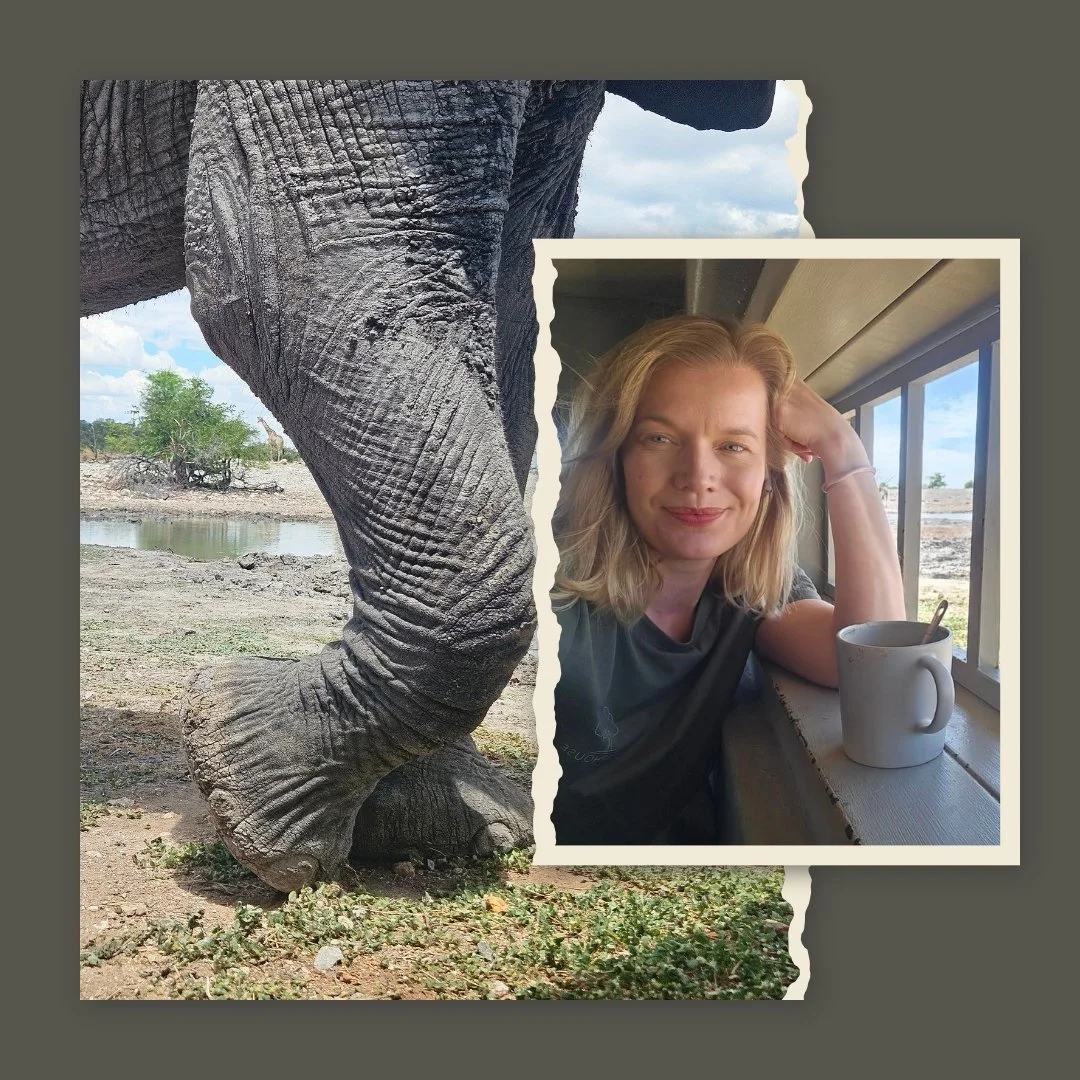
When I was nine, I dreamed of buying a big truck and driving around the world rescuing animals to bring them to my own island sanctuary. 30 years later, I still don't have that truck or island. But I've spent the last decade trying to answer a question that still drives me: how can humans and animals share this world more harmoniously?
I've been leading environmental education initiatives across Namibia, Portugal, and Finland and researching and teaching at the intersection of education, animal law, policy and international relations. My work has taken me around the world and I move with ease between the bush, boardrooms and classrooms (although I am happiest in the bush). I believe that real change happens when every voice and story is heard—whether that's in a classroom, boardroom, or around a campfire.
Social media isn't my natural habitat, but on Instagram I will be sharing:
- The work I'm doing in Namibia, Portugal, Finland
- Questions I'm endlessly curious about
- Moments and inspirational encounters from my journey in the wild
And I want to hear your stories too. What's a story or encounter that impacted how you see the world? Connect with me on Instagram @mashainthewild or LinkedIn @mariahelenasaari!
RIGHTS OF NATURE
What if nature held an official seat in the United Nations? Youth-led interspecies diplomacy in France.
RIGHTS OF NATURE IN THE MODEL UNITED NATIONS
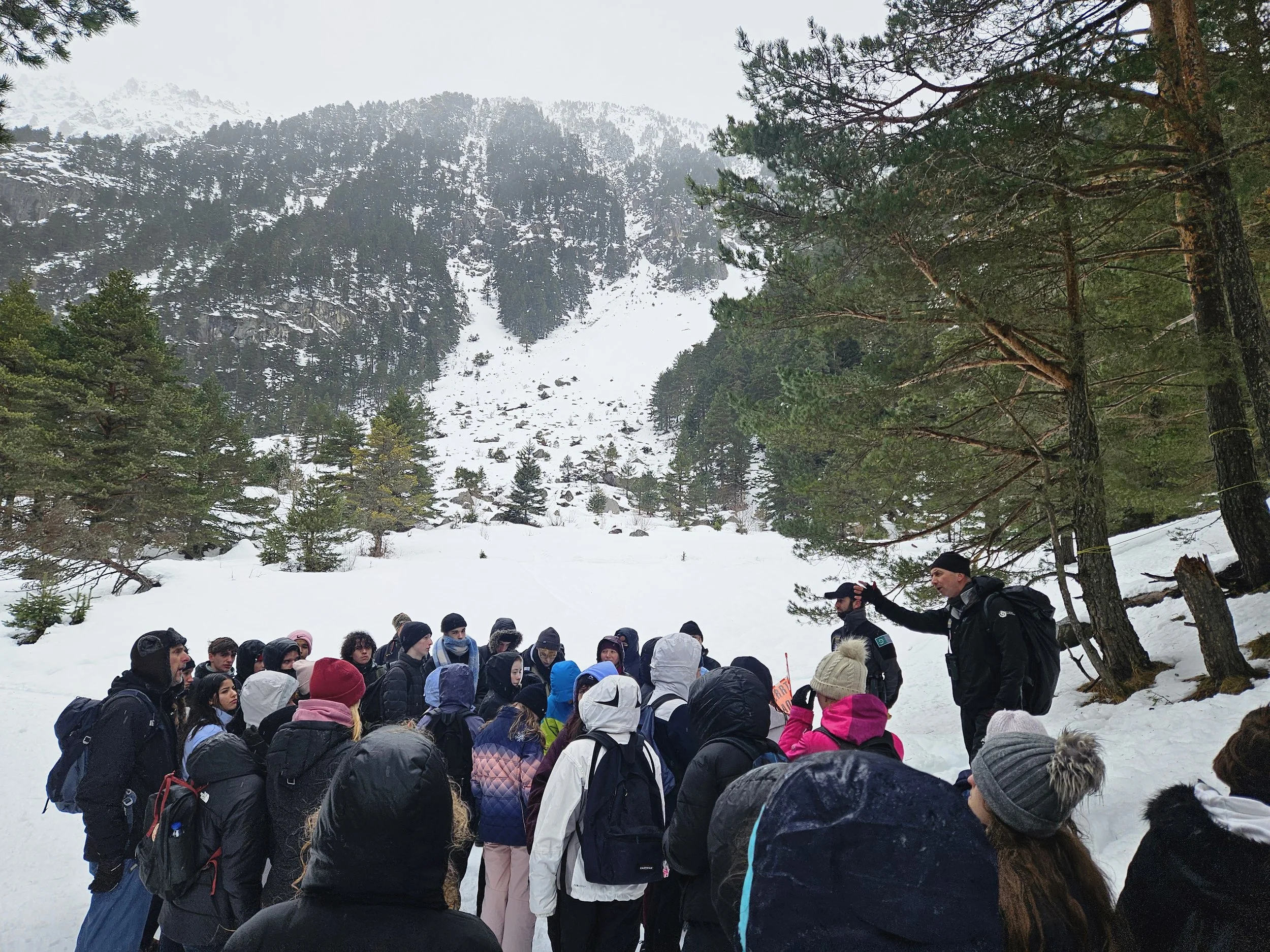
Twenty years ago, I took part in my first Model United Nations, too shy to speak a word. Last week I was back at an MUN Conference, this time as Guest Speaker and Advisor.
What if nature held an official seat in the United Nations? At Tournefeuille Model United Nations (TOUMUN VIII), hosted by the Polyvalent Françoise School in France, this idea moved from imagination to practice. In this ambitious pilot exploring the rights of nature and interspecies diplomacy within Model United Nations, Dr. Jonathan Carruthers‑Jones and I collaborated with youth delegates from Tammerkoski Upper Secondary School (Finland) and Theophile Gautier School (France). Together, we examined what unfolds when Delegations of the African Elephant, Blue Whales, Amazon River, Great Barrier Reef, and Borneo Rainforest enter formal negotiations alongside nation states.
Within the UNEP committee, these nature delegations engaged directly in debates on multispecies approaches to biodiversity conservation and the integration of nature‑based solutions into city planning. Notably, the resolution on biodiversity conservation introduced by the Blue Whales Delegation was adopted, marking a significant milestone in this experimental diplomatic framework. We trained the delegates together with expert Model United Nations coach Nicolas Bounet from Theophile Gautier School and rangers from the Pyrenees National Park. Rangers from the Pyrenees National Park trained delegates in how to listen to, interpret, and represent the needs of living ecosystems. Their field‑based wisdom grounded the simulation in real ecological relationships, helping students move beyond symbolism into genuine interspecies diplomacy. The guidance of Pyrenees National Park rangers was invaluable. Their deep ecological knowledge and lived experience with the land helped delegates understand that representing nature begins with learning from those who protect it everyday.
Thank you to the absolutely amazing TOUMUN organizing committee, fellow TOUMUN Advisors, Honorable Delegates, Chairs and Secretaries General for the innovation and open-mindedness in exploring the future of youth-led global and local decision-making where the voices of nature are heard.
For more information about TOUMUN: https://www.toumun.fr/home
For more information about the MUST – Enabling multispecies transitions project: https://must-project.fi/
UNIVERSITY OF OULU - UNIVERSITY OF NAMIBIA STRATEGIC PARTNERSHIP AWARDED NEW FUNDING
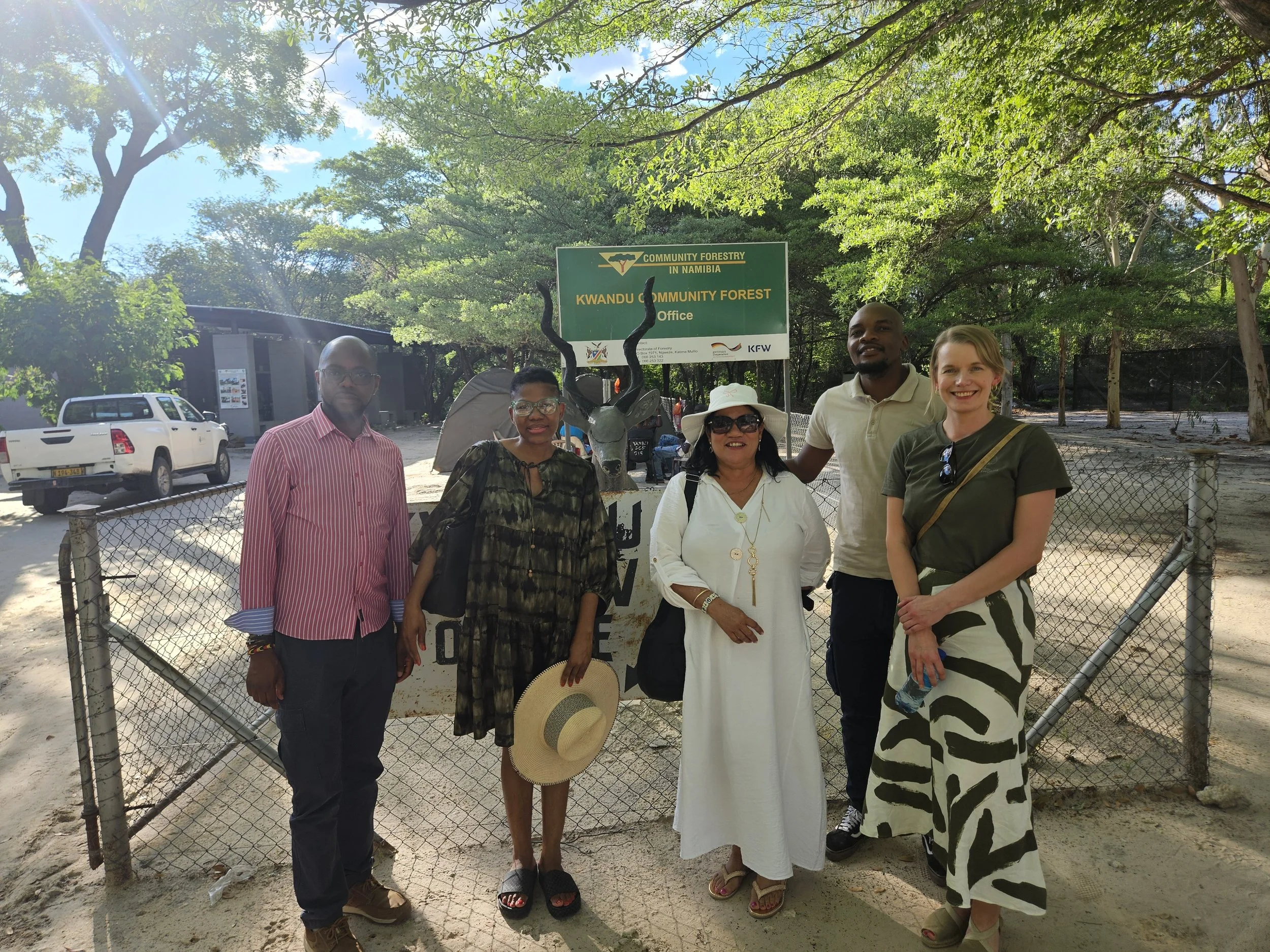
Extremely grateful to the University of Oulu Office of International Affairs for awarding another International Strategic Partnership grant to expand our collaboration with University of Namibia Katima Mulilo Campus Department of Wildlife & Tourism Studies, Khomasdal Campus School of Education, Kwandu Conservancy, and the Global Environmental Law Centre at University of Western Cape. Our mission: Advancing human-wildlife coexistence in biodiversity hotspots through youth leadership and community-centered governance. We will be working directly with conservancy leaders, rangers, educators, and youth in the KAZA Transfrontier Conservation Area in 2026.
Our approach:
· Participatory research centering community and youth voices
· Place-based learning through storytelling and ethnomusicology
· Youth-led interspecies diplomacy
Thank you to the Uni Oulu Office of International Affairs for their continued support and thank you to Prof. Ezequiel Fabiano, Dr. Taimi Nghikembua and Richardine Poulton-Busler for continued collaborations. We will be sharing regular updates on our project throughout the year.
working on human-animal coexistence?
Connect with our project - get in touch: maria.saari@oulu.fi
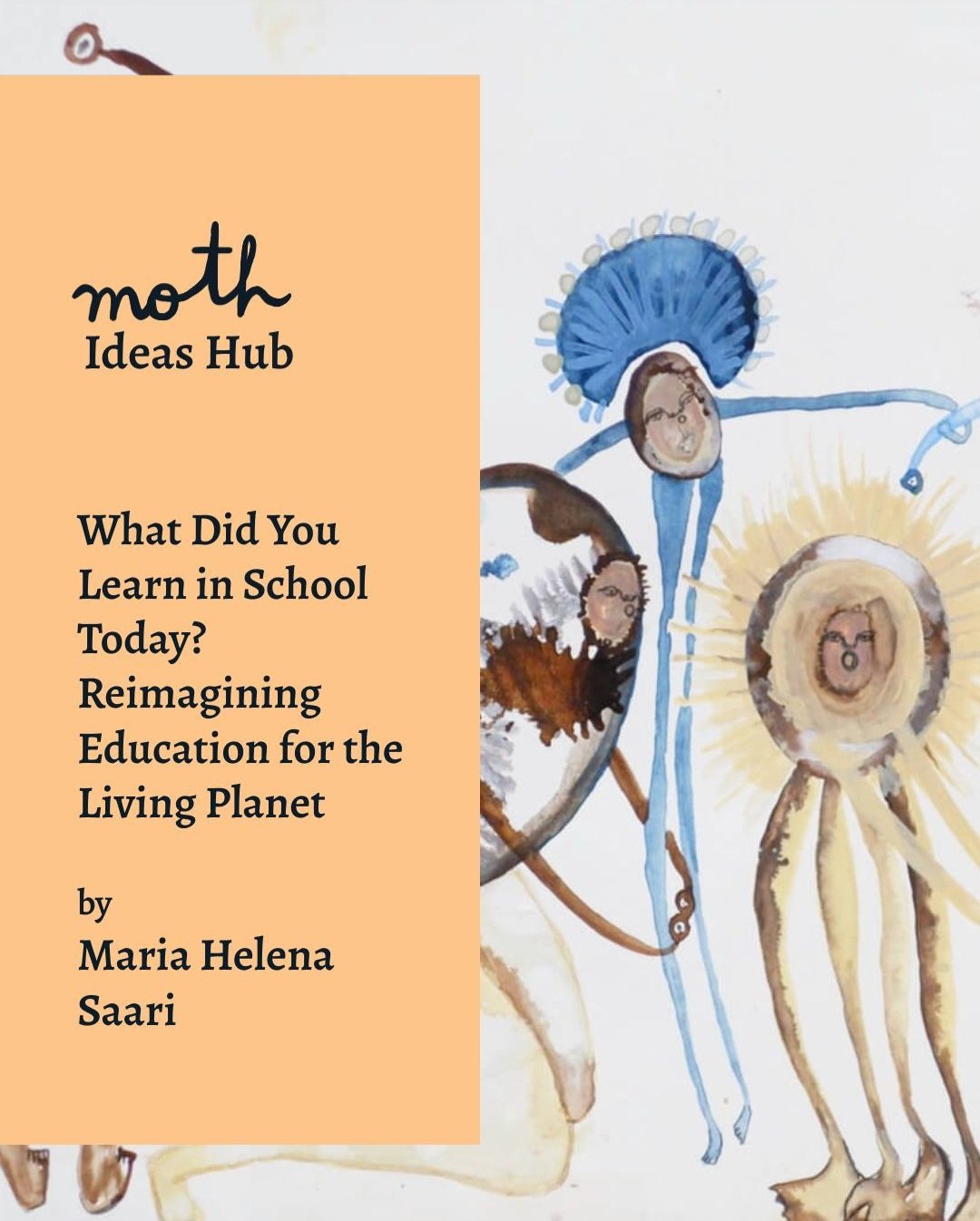
What did you learn in school today?
Full text available in the MOTH Ideas Hub.
Reflections from the MOTH Festival in New York: How can educational spaces support earthly flourishing?
In March 2025, I joined the MOTH Festival of Ideas in New York, which brought together diverse voices to explore interdisciplinary perspectives for Earthly Flourishing.
On 12-14th March 2025, researchers, artists, and practitioners from diverse disciplines, around the world, gathered at the More-Than-Human Life (MOTH) Festival of Ideas: Interdisciplinary Perspectives for Earthly Flourishing at New York University School of Law. The festival was organized by the MOTH Program, an interdisciplinary initiative advancing the protection of the more-than-human world at the intersections of ecological sciences, Indigenous knowledge and the arts.
Over the course of three days, the MOTH festival provided a unique setting for closed-door interdisciplinary academic roundtable discussions, followed by poetry readings, performances, concerts, film screenings, and book launches open to the public. The richness of the conversations and the feel of community was well summed up by MOTH Founding Director César Rodríguez-Garavito in his closing words of the festival echoing the feedback received during the festival: “everyone felt like they belong.”
And, I wholeheartedly agree with this sentiment. I was fortunate to gain the opportunity to present our research work at MUST at one of the four interdisciplinary thematic groups in the festival. In the group I was part of, we heard rich contributions from a variety of perspectives including a question ‘Could Glacier be a President?’ posed by Iceland’s first Rights of Nature Movement Snæfellsjökull for President, and an arts-informed exploration of interspecies communication by Keith Williams. These contributions were accompanied by Susie Talbot’s in-depth presentation on Earth Law (Anima Mundi Law Initiative) and Yusuf Samsudin’s thought-provoking session on conservation and human-animal conflict/coexistence. I was deeply grateful to contribute to this group’s discussions by sharing and discussing the work we do in MUST project’s WP2: Unlearning with Other Species, which I co-lead.
Together, the various presentations offered a valuable space for thought-provoking critical constructive discussions, a space where communities of practice can truly be built. I left the festival full of gratitude for the new connections made, discussions held, and the new, expanded insights it gave for the work that we are carrying out in MUST.
What might educational spaces of multispecies justice-oriented education look like?
In my presentation Multispecies Justice and Spaces of Peaceability in Education I talked about challenging hierarchical anthropocentrism in education, the ways in which schooling is connected to broader systems of violence against Earth others and how we might cultivate spaces of peaceability in and through education (Saari, 2025). In the discussions, we explored how education can be more attentive and responsive to the socioecological challenges we face and how we might cultivate educational spaces that support earthly flourishing.
In WP2 we have been co-creating these spaces with teachers and students through our pilot workshops we concluded in primary school in Finland and a high school in Portugal this spring, as well as through our work in pre-service teacher education at the University of Oulu. What might spaces of multispecies justice-oriented education look like, you might wonder? In our school workshops, we explored this question through methods such as storytelling, photo-elicitation, and arts-based approaches, and by collaborating with animal sanctuaries. We drew inspiration from a range of educational frameworks, including ecojustice education, humane education, and critical animal pedagogies.
Some of the many questions we have explored together with students include what it means to be protected, who has the right to make such decisions and what protected space might look like for different beings. We had the opportunity to visit animal sanctuaries in Finland and Portugal, which showed us how encounters with different animals and hearing their stories can impact and challenge the ways we see the world. We explored what we can learn from other animals, and how we might transform practices and systems to be more just for all affected. We are now busy compiling our methods, themes and inquisitive prompts into accessible open-access material that will be available later this year. Building and sustaining communities of practice for earthly flourishing is a priority in the MUST project and we are grateful to the schools, sanctuaries, teachers and students who worked with us this spring.
Working towards earthly flourishing in Finland
This spring, our MUST workpackage 2 has also worked in close collaboration with MUST’s Work Package 6 to explore the feasibility of multispecies governance transitions in Finland using the Delphi survey method. The MOTH festival provided an excellent platform to present our ongoing work with MUST WP6. We engaged in discussions about the opportunities and challenges of achieving just multispecies governance in Finland, emphasizing the crucial role of education and educational policy in advancing multispecies justice. This aligns with Rodríguez-Garavito’s (2024) advocacy in their book, “More Than Human Rights policy and legal ecosystem.” We look forward to sharing our Delphi survey findings later in the autumn.
We are always happy to connect and grow the movement working towards earthly flourishing. If you would like to hear more about our work, have any questions or just want to say hello or tell us about your own work on cultivating earthly flourishing, contact Maria at maria.saari@oulu.fi.
References:
Saari, M. H. (2025). Crafting palettes of potential for a multispecies justice-oriented education. Environmental Education Research, 1–17. https://doi.org/10.1080/13504622.2025.2475150
Rodríguez-Garavito, C. (2024). More-Than-Human Rights: Law, Science, and Storytelling Beyond Anthropocentrism. In C. Rodríguez-Garavito (ed.) More Than Human Rights: An Ecology of Law, Thought and Narrative for Earthly Flourishing. New York University, 21-47.
Exploring perspectives on multispecies justice in Australia
When you hear the name Australia, what comes to your mind? For many it might be koalas and kangaroos, breathtaking beaches, gum trees, cricket, or perhaps Australia’s first peoples and languages. For me it was all these things, having been lucky enough to have called Australia home as a child. Forever imprinted in my memory are the fresh scent of the gum trees after the rain and walking through the bush as cockatoos glide through the canopy above. Now however, when I hear the name Australia, I think about multispecies justice. Why? Australia is not only home to lush forests and iconic wildlife, but also to the Sydney Environment Institute (SEI), a pioneer in multispecies justice research, where I had the unique opportunity to visit as Visiting Fellow in April 2024. SEI is an important partner of the MUST project and the work carried out at SEI continues to be an inspiration to many across the world.

Sydney Environment Institute holds strong voices for multispecies justice
While the devastating effects of the climate crisis, particularly wildfires, are silencing voices in Australia as lives are lost and forests fall silent, some voices are getting stronger amidst the ruins. It is these voices I came to Sydney to hear (and if lucky, to the otherworldly screeches of flocks of cockatoos).
One of the strong voices from SEI is that of Danielle Celermajer whose first-hand experiences of wildfires is a reminder of the vulnerability of both humans and other species in the midst of the climate crisis. One of the many important projects at Sydney Environment Institute is one that looks at ways to better protect animals in catastrophic fires and how to support communities navigate collective trauma and loss. In Australia, as many other places, learning to live with climate change is not an abstract concept we must prepare for, but a lived ongoing reality. I came to SEI wanting to better understand what multispecies justice is and what it might look like in practice. At a roundtable discussion organized by the fantastic team at SEI these were some of the many questions discussed.
Multispecies justice giving space for vital discussions
If we understand multispecies justice, as Celermajer explains, as an invitation and a space to navigate through conflict, we might find ourselves in a welcome space to share concerns, needs and questions. Holding space for difficult feelings can lead to conversations that open up new possibilities. Dialogue and listening to each other, to other animals, trees, insects and all the earth beings we share this planet with is important when we try to collectively find ways to live in ways that support the wellbeing and flourishing of all.
If you are interested in learning more about the work of the Sydney Environment Institute I encourage you to check out the SEI Podcast Series for a collection of thought-provoking conversations. Interested in joining the conversation on what just multispecies transitions could look like? Connect with us in the MUST project on LinkedIn.
This blog post was first published on the MUST website where you can find different posts about our project on multispecies transitions.
mosscast: A multivoicED podcast
Join the mosscrew for conversations around multispecies (justice) education, art, research and practice. Inspired by the resilience, renewal and interconnectedness of flourishing moss. Our first guest, Dr. Johnny Lupinacci, talked about anarchism, ecojustice education and finding joy in messy friendships. All episodes available on our website and Spotify.
